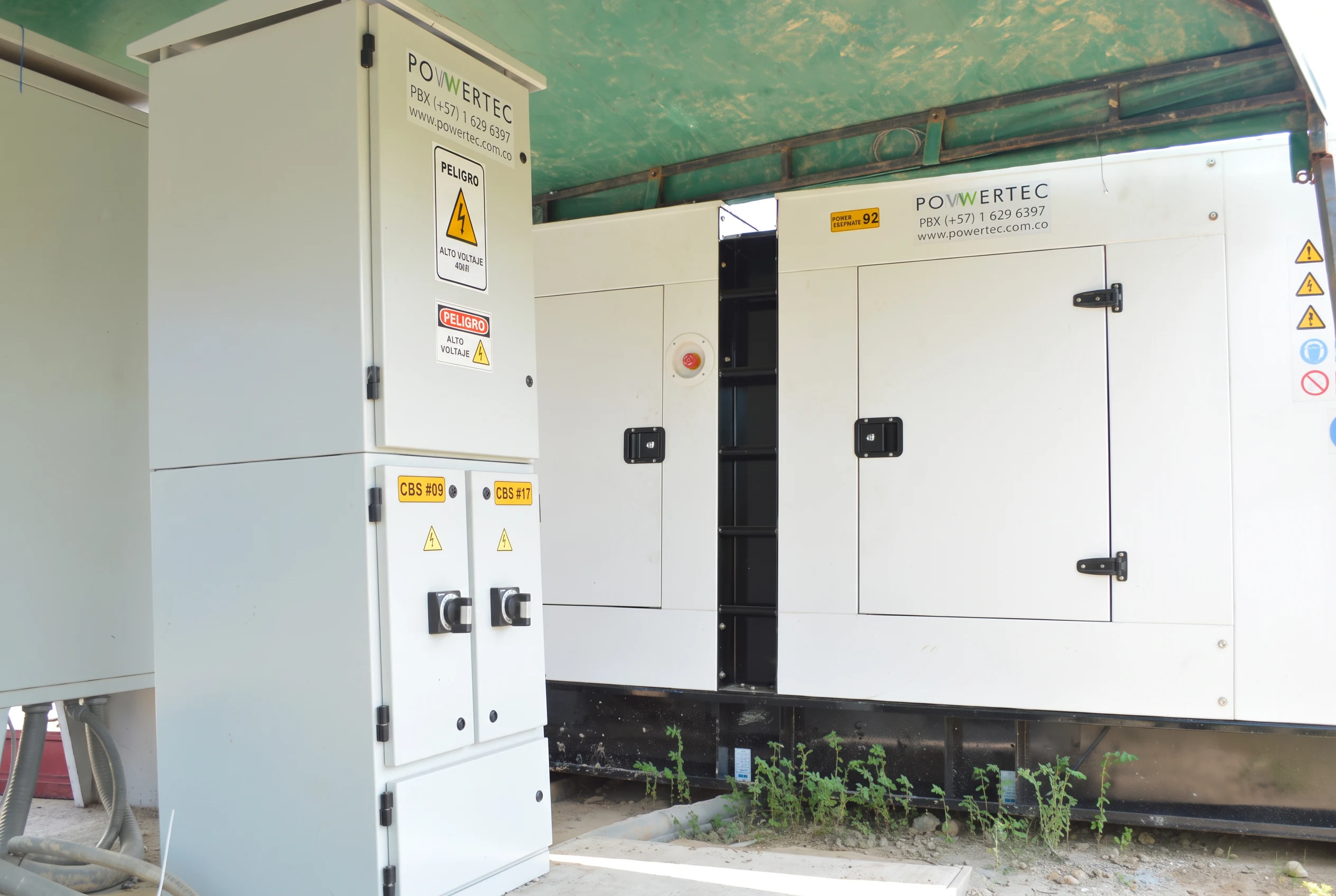
When a distribution switchgear panel declares compliance with NEMA/ANSI/IEEE standards, it is making concrete technical claims: how it is built, what tests it passed, and under what conditions it can operate safely. Understanding those acronyms lets you compare bids and demand what the installation actually needs.
NEMA: the North American construction environment
NEMA (National Electrical Manufacturers Association) defines enclosure classifications according to the environment they are designed for: NEMA 1 is for clean indoor spaces, NEMA 3R withstands outdoor rain, NEMA 4 resists water jets, and so on up to corrosive or explosion-hazard environments.
NEMA also standardizes dimensions, wiring practices and the performance of starters and contactors. In Colombian practice, NEMA enclosures are the usual reference for industrial installations because of the availability of equipment and spare parts from the North American market.
ANSI: standards coordination
ANSI (American National Standards Institute) does not write most electrical standards: it accredits and coordinates them. When a standard carries the ANSI seal, it means it was developed under a recognized consensus process, which gives it validity before regulators and insurers.
In switchgear, ANSI references appear associated with device codes (the ANSI protection function numbers, such as 50/51 for overcurrent) and with the testing and designation standards for power circuit breakers.
IEEE: engineering and power testing
The IEEE (Institute of Electrical and Electronics Engineers) publishes the design, application and testing standards for power electrical equipment. For low-voltage switchgear, the C37 series (breakers and protections) and the guides on protection coordination, selectivity and short-circuit calculation are especially relevant.
The switchgear's short-circuit capacity — the maximum fault current it can withstand and interrupt without being destroyed — is specified and tested under these standards. Switchgear whose protections have an interrupting capacity lower than the fault current available at the installation point is a risk, not a savings.
The IP protection rating
In parallel to NEMA, the IP code (IEC 60529) classifies enclosure protection with two digits: the first against solids and contact, the second against water. IP20 switchgear protects against objects larger than 12 mm (fingers, tools) but not against water: it is the appropriate rating for indoor electrical rooms.
For outdoor areas, humid zones or pressure washing, higher ratings are required — IP54, IP65 or NEMA 3R/4/4X equivalents — with the cost and thermal-dissipation attention that implies. Specifying IP20 on a rooftop or a NEMA 4X in a clean room are both mistakes: one due to risk, the other due to overcost.
How it all connects with RETIE
In Colombia, RETIE is the mandatory regulation for electrical installations, and it requires products — switchgear, breakers, cables — to comply with recognized technical standards, including IEC and NEMA/ANSI/IEEE, with a product conformity certificate.
In practice, compliant switchgear rests on three pillars: design under NEMA/ANSI/IEEE standards, a valid product certificate from an accredited body, and installation plus a RETIE inspection report from an inspection body. Requiring those three documents is the most effective way to compare suppliers without being a specialist.
What to request when quoting switchgear
- Declared design and manufacturing standard (NEMA/ANSI/IEEE or equivalent IEC).
- Short-circuit capacity of the assembly and of each protective device.
- IP protection rating or NEMA classification matching the installation site.
- Valid product conformity certificate.
- Single-line diagrams, control diagrams and factory acceptance test (FAT) routines.
- Post-installation RETIE inspection plan.